Balers for MRF
Balers for MRF: choosing the right configuration for mixed recycling flows
In an MRF, the baler has to follow a changing material flow, from OCC and mixed paper to PET and other plastic fractions. The right configuration is not defined by nominal throughput alone, but by feed rate, material density, bale quality, tying system and integration with the sorting line.
For plant managers, the real question is simple: how does the baler perform when the material mix changes during the shift?
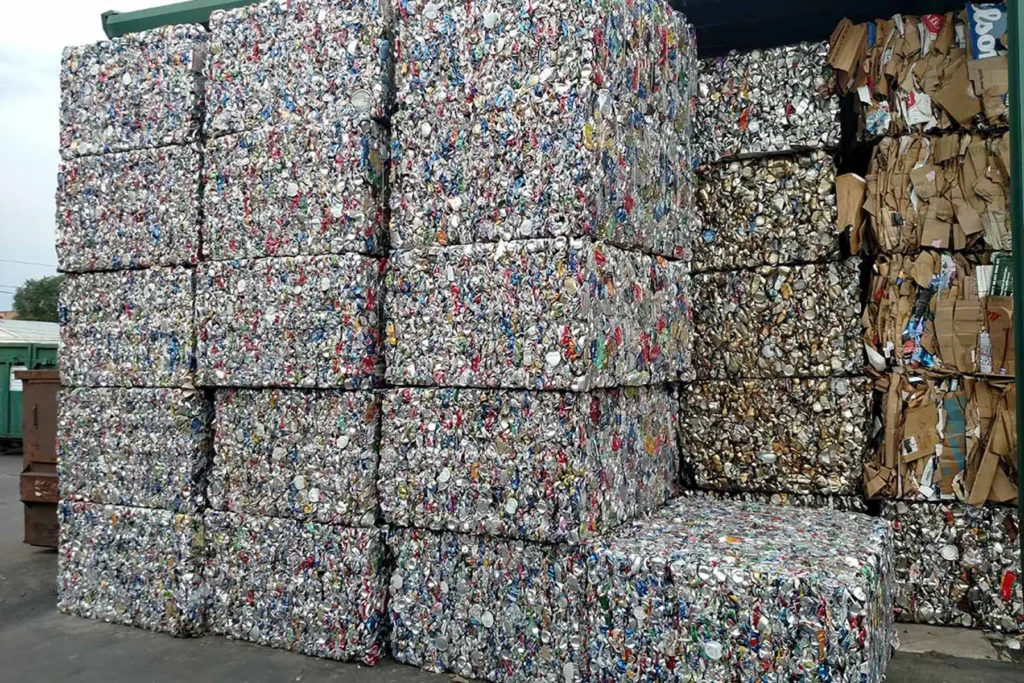
What a MRF baler has to manage
Mixed material streams
A Material Recovery Facility does not feed one stable material into the baler. It processes different recyclable streams, often with changing proportions during the same working day: OCC, mixed paper, cardboard, PET and other plastics.
Each material behaves differently inside the baling chamber. OCC and cardboard can be bulky at the feed opening, but they usually compact in a predictable way. PET bottles enter the line with low density and need controlled compaction to form stable bales. Mixed paper can vary by source, moisture and composition.
For this reason, a baler for MRF applications has to be selected around the material flow, not only around the name of the material.
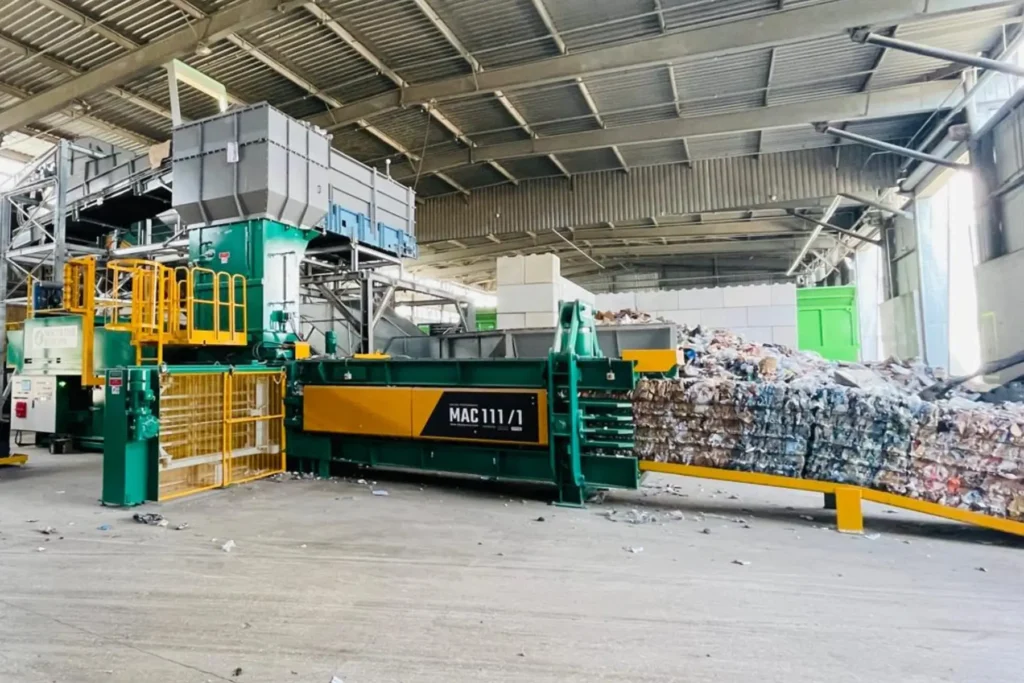
Feed opening, hopper volume and cutting
In a sorting line, the feed opening and hopper volume are not secondary details. They determine how well the machine receives bulky material without slowing the line or requiring unnecessary manual handling.
The cutting system also matters. When excess material remains in the hopper, the baler has to cut and compact it without interrupting the cycle. If this part of the process is undersized, the baler can become the restriction point of the line.
Throughput is not only nominal capacity
The variables behind real output
Throughput figures are useful, but they do not tell the full story. Real output depends on several variables:
- feed rate
- material density at the feed point
- moisture content
- chamber filling behavior
- cycle time
- bale format
- tying configuration
A light plastic stream does not behave like mixed paper. A bulky OCC flow does not behave like a more regular paper fraction. The same baler can therefore produce different hourly outputs depending on the material entering the line.
Why material changes matter
In a MRF, material composition can change continuously. This is why the selection process should not stop at maximum ton/hour data.
The better question is: can the baler keep the line stable when the input changes?
This depends on the full configuration: feed system, chamber, cutting system, counterpressure, hydraulic performance and tying unit. Motor power and pressing force are important, but they are only part of the decision.
Bale quality affects storage, transport and handling
Density, dimensions and stability
Once the bale leaves the press, it becomes a logistics unit. Its density, dimensions and stability affect how it is stored, stacked, loaded and transported.
In a MRF, this matters because not all bales behave in the same way. A compact OCC bale, a PET bale and a mixed paper bale can have different stability and handling requirements, even when they come from the same line.
Bale quality is therefore not only a machine performance issue. It affects the yard, the warehouse and the transport phase.
Downstream logistics
The destination of the bale should influence the baler configuration.
If the material goes directly to a mill, bale format and tying material must be compatible with the receiving process. When the material is stored or shipped, density and bale stability become more important. If the plant works with export flows, loading efficiency can have a direct impact on cost per tonne.
Macpresse balers are designed to produce bale formats suitable for common transport methods, including trucks, containers and railroad cars.
Tying system: a technical detail with practical impact
Wire configuration and material destination
The tying system is often treated as a small specification. In MRF applications, it should not be.
The choice of tying material and number of wires affects bale stability, handling and operating cost. It should be defined according to the material, bale format and final destination.
Macpresse horizontal tying systems can be configured with plastic monofilament wire, steel wire or different wire layouts, including 5+3, 5 or 4 wires on MAC 110 and 111 series models.
This flexibility is useful when the same facility has to manage different recyclable streams. The tying system should not be selected as a default option. It should be part of the technical configuration of the line.
For a deeper look at tying materials, read our article on PET tying wire for waste paper bales.
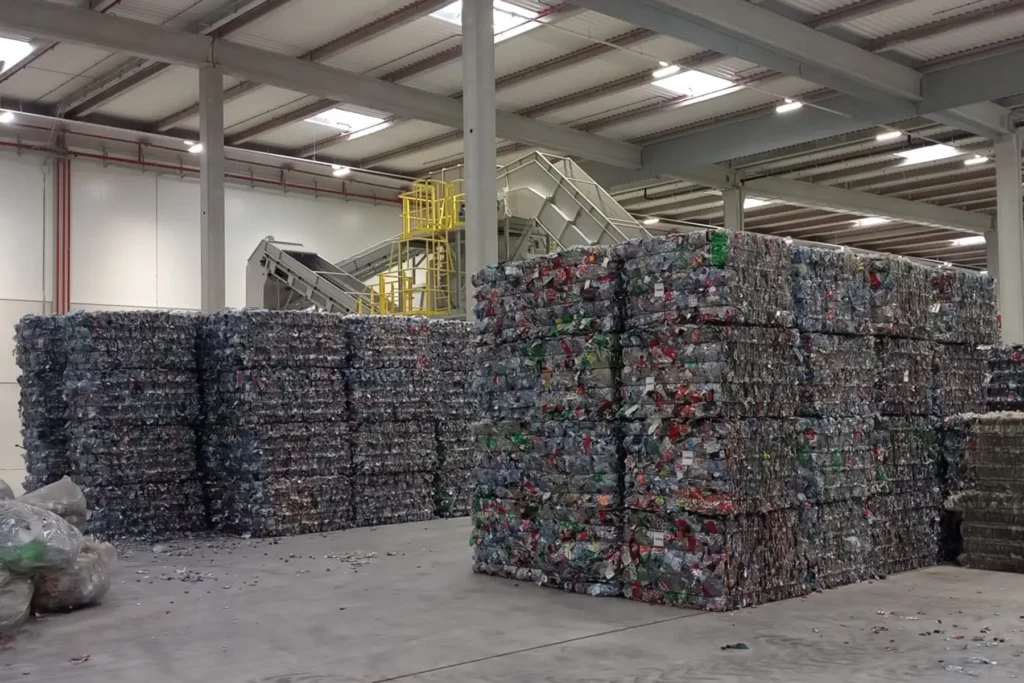
Macpresse balers for MRF applications
MRF applications can require different configurations depending on the market, plant layout, material flow and required bale output. For this reason, model selection should be based on the operating conditions of the facility, not on a single standard specification.
MAC 110AS/1
The MAC 110AS/1 is a high-capacity automatic horizontal baler for facilities handling large volumes of recyclable materials and RDF/SRF. It is designed for mixed paper, cardboard, PET and RDF/SRF, with a wide loading hopper for bulky materials and bale formats suitable for storage and transport by truck, container and rail.
See the MAC 110AS/1 product page.
MAC 111/1
The MAC 111/1 is positioned for secondary raw material processing, with applications in OCC, PET, mixed paper and RDF/SRF lines. It is suitable for facilities that need to manage different material streams within the same baling process.
See the MAC 111/1 product page.
Integration with sorting plants
For MRF applications, the baler should be considered as part of the sorting line, not as an isolated machine.
Conveyors, feeding points, automation, bale handling and available space all influence the final configuration. The configuration should start from the actual material flow of the plant, not from a standard model list.
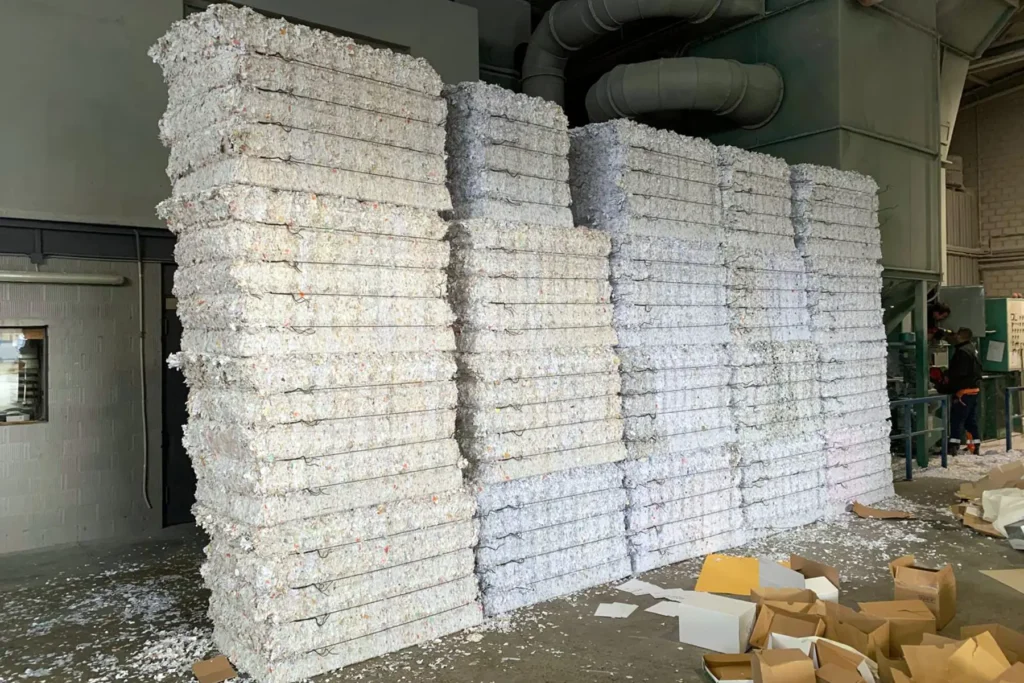
Frequently asked questions about MRF balers
Yes, if the machine is configured for multi-material operation. The key points are feed opening, cutting system, counterpressure, chamber behavior and tying configuration. A baler selected for a single material flow may not be suitable for mixed MRF operation without the right setup.
Because density, moisture, material shape and chamber filling behavior change from one stream to another. PET, OCC and mixed paper do not enter, compact or tie in the same way. Nominal throughput is useful, but real output depends on the material flow.
Feed opening, hopper volume, cycle time, compaction force, counterpressure, tying system and integration with the sorting line. Nominal capacity is a starting point, not the only selection criterion.
Because the bale has to be moved, stored, stacked, loaded and accepted by the next facility. A bale that is unstable, too light or poorly matched to transport requirements can create problems after the press, even if the compaction cycle itself is complete.
For technical information about baler configurations for MRF and sorting line applications,
contact the Macpresse technical team.