PET Tie for Waste Paper Bales: Operational Benefits and Impact on Tying Costs
In the recovered paper cycle, the choice of tying material is not a minor detail. It affects bale stability, storage management, tying unit maintenance and, consequently, operational continuity throughout the supply chain.
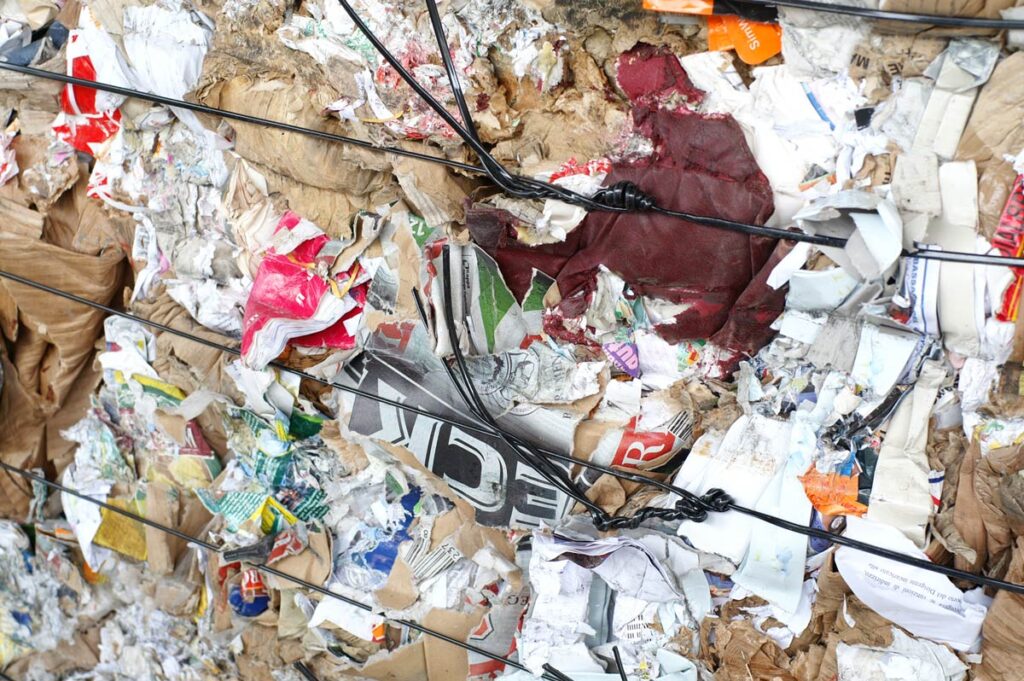
For many years, steel wire has been the standard solution. Today, however, many installations are evaluating the transition to PET tying in order to mitigate some of the typical limitations associated with metal wire.
The proper context: PET as standard in RDF applications, configurable for paper and cardboard
It is important to clarify the starting point. In Macpresse balers, PET tying systems are commonly adopted as the standard configuration for RDF (Refuse Derived Fuel) applications.
From this established base, PET tying can also be configured for plants processing recovered paper and cardboard, depending on operating conditions and line specifications.
It is not a solution originally developed specifically for paper, but an industrial technology already consolidated in other material streams and, when properly configured, fully applicable to recovered paper operations.
Why steel wire may become a limitation in modern material flows
Steel wire remains effective under controlled conditions, but it introduces two well-known vulnerabilities for operators managing continuous storage and handling cycles.
The first is oxidation. Humidity, prolonged exposure and outdoor storage can lead to corrosion, resulting in wire degradation and a higher likelihood of tension loss over time.
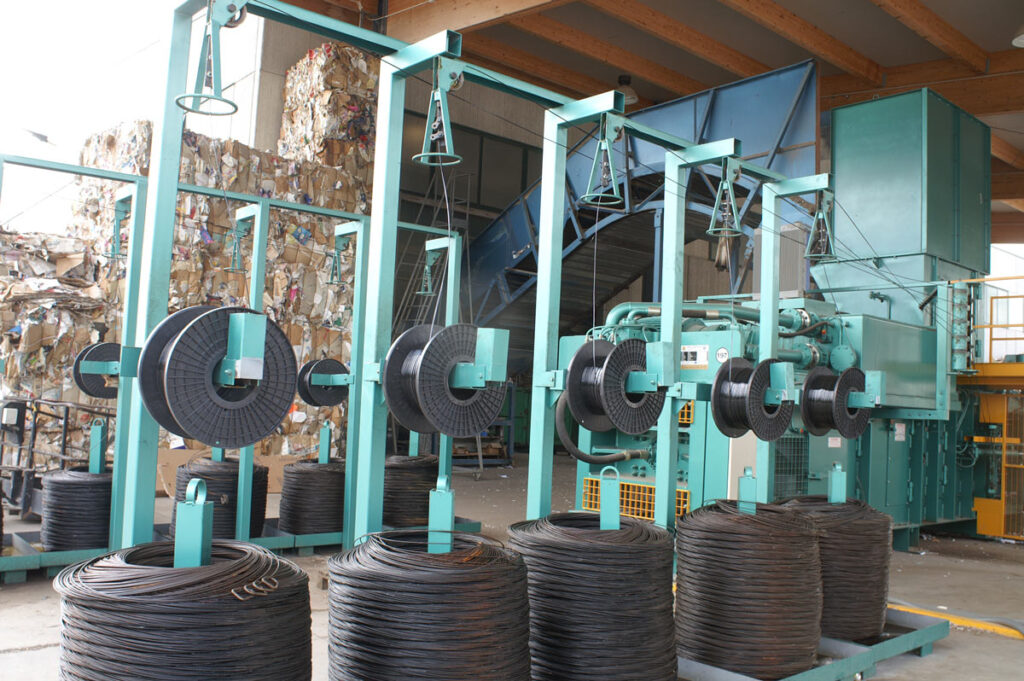
The second concerns the impact on the tying unit. The repeated passage of metallic material through guiding and twisting components may progressively increase wear, leading to more frequent adjustments and maintenance interventions.
When operational continuity becomes a measurable performance objective, these variables directly affect the total cost of ownership.
What changes with PET tying from a bale performance perspective
PET used for industrial tying is engineered for high tensile strength combined with controlled elastic response. In practical terms, the tie tends to maintain more consistent tension over time, accommodating the natural settlement of a compressed bale without turning it into progressive loosening.
From a mechanical standpoint, the objective is not to generate greater absolute strength, but to ensure stability and predictable holding performance under real logistics and warehouse conditions.
Compatibility with the pulper: operational implications
One of the most common concerns regarding plastic ties on bales destined for paper mills relates to behaviour in the pulper.
Operationally, the relevant question is not whether PET “disappears” during the process. It does not. The key point is whether it creates interference affecting cycle time, process reliability or separation efficiency.
Industrial feedback indicates that PET ties, once entering the pulping stage, behave as a stable fraction and are handled as inert rejects by the extraction systems, without introducing specific issues related to corrosion or entanglement typically associated with metallic materials.
This does not eliminate the need for reject removal, but it may reduce the likelihood of events leading to downtime or corrective interventions.
Storage: corrosion resistance, retention and long-term bale management
In the comparison between PET and steel, storage performance is often the most immediately verifiable aspect.
PET is not subject to corrosion and, when correctly applied, maintains its characteristics over time even in humid environments. This reduces the risk of tie degradation and contributes to bale stability during extended storage in yards or vessel holds.


Cost impact
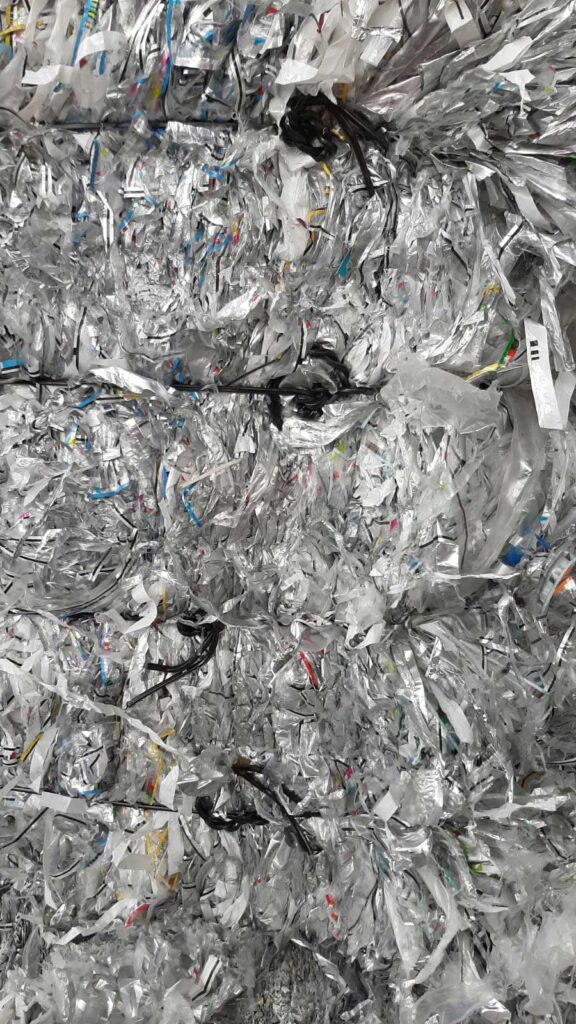
The transition from steel wire to PET can reduce tying costs due to a more favourable cost per metre and because the lower mechanical aggressiveness toward the tying unit may decrease maintenance requirements over time.
In high-throughput plants, even small differences in consumable costs or maintenance frequency become significant on an annual basis. However, figures must always be evaluated according to plant-specific parameters: number of bales, processed material, shifts, storage conditions and logistics.
Tying unit: why PET may reduce wear
From a mechanical perspective, PET tends to run through the tie guides without abrasive residues and without generating oxidation-related particles or metallic debris.
This may translate into reduced wear on components such as guides, hooks and twisting systems, as well as more stable calibration of the tying unit over time.
Practical evaluation: start from your plant data
Each line has its own operational profile. The relevant question is not “PET versus steel in theory,” but rather the actual impact of the transition on annual tying costs and tying unit management based on real volumes and operating conditions.
Macpresse can support the analysis phase with a customised projection of potential annual savings and the technical guidance required to implement a transition consistent with your baling line configuration.
Want to calculate the financial impact of switching to PET strapping on your line?
Contact our technical team for a personalized analysis: we will work with you to calculate potential savings on consumables and the reduction in annual maintenance costs for your specific plant.
Read also: Plastic baling wire: an innovation pioneered by Macpresse