From waste to resource: plastic becomes solid recovered fuel | SRF
Recycling and the transformation of plastic are opening the way to a more sustainable future, reducing emissions and optimising industrial processes.
The management of plastic waste is one of the greatest challenges of our time. While plastic is often seen as a problem, innovative solutions exist that can turn it into a sustainable resource. In this context, balers play a particularly important role in the treatment of plastic materials, especially in the baling of materials such as Solid Recovered Fuel (SRF) and other plastic waste.

The role of balers in waste treatment
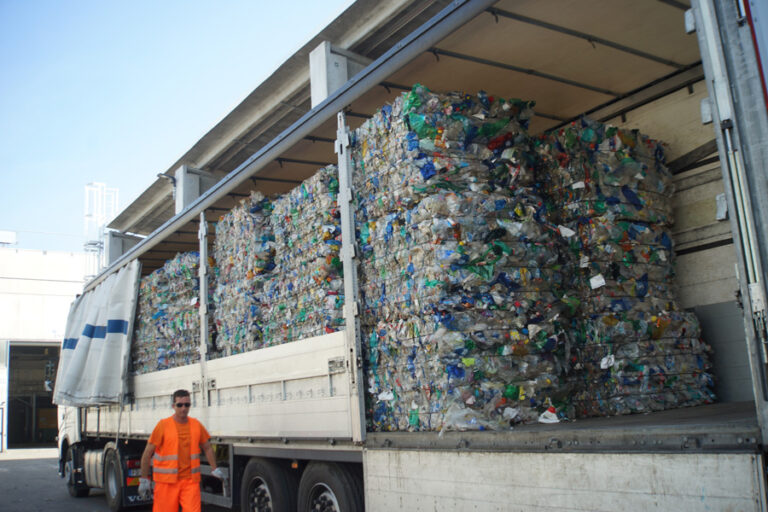
Balers are essential machines for reducing waste volume. Many of these balers are now used for baling SRF, an alternative fuel that replaces fossil fuels in cement plants. This process reduces CO2 emissions and the logistical costs associated with importing traditional fuels.
How the process of converting plasmix into SRF works
Plasmix is a mixed fraction of plastic waste remaining from the plastic recycling process. In practice, it consists of those plastic components that cannot be directly reintroduced into the production chain as secondary raw material.
Plasmix is transformed into SRF through a shredding process and the separation of unwanted materials. This process involves the use of optical and air separation systems to clean the material, which is then refined in order to obtain a high-quality fuel.
Environmental and economic advantages of SRF
At present, petcoke, a synthetic fuel derived from oil refining, is the most widely used fuel in cement plants and other industrial facilities. However, this fuel has a significant environmental impact due to high CO2 emissions.
The use of SRF instead of petcoke offers several advantages:
- Reduction of CO2 emissions: using SRF can reduce CO2 emissions by between 550 and 1,300 kg per tonne compared with petcoke
- Logistical savings: local production of SRF eliminates the emissions associated with the transport of imported fuels
- Lower costs: SRF is less expensive than traditional fossil fuels
The situation in Italy and Europe
In Italy, it is estimated that SRF covers only 21 to 22% of the energy used in cement plants, while in Europe the average is 50%.
Increasing the production and use of SRF could further reduce the amount of waste sent to landfill and improve energy efficiency.

The importance of separate waste collection
The starting point for an effective treatment cycle is proper separate waste collection. This step makes it possible to select materials suitable for treatment, reducing non-recyclable waste.
Once collected, the waste is processed through sorting and shredding stages, which prepare the material for the balers. This is where equipment quality becomes crucial: modern balers ensure optimal compaction and support the efficiency gains resulting from the conversion of plasmix into high-quality SRF.
The latest generation of balers reduces operating costs thanks to their reliability, their ability to handle large volumes of waste and the reduction of logistics costs by optimising bales for the main transport systems.
Want to reduce logistics costs and optimise plastic waste treatment? Get in touch with our experts for more information.