Plastic baling wire for bale tying: a revolution born at Macpresse
In the waste treatment and packaging sector, every component affects the overall efficiency of the plant. But some choices have fundamentally redefined entire operational practices.
The case of plastic baling wire — today widely used in RDF plants, waste-to-energy facilities, and municipal solid waste (MSW) platforms — is a prime example. A system that became a technical standard in less than two decades, but one that originated from a precise decision made by Macpresse Europa in 2005.
Until that point, steel wire was the norm: inexpensive, strong, and ubiquitous. But with obvious limitations. Macpresse was the first to challenge them — by introducing plastic baling wire and a dedicated plastic wire tying unit on its automatic balers, marking the beginning of a technical and operational paradigm shift in the industry.
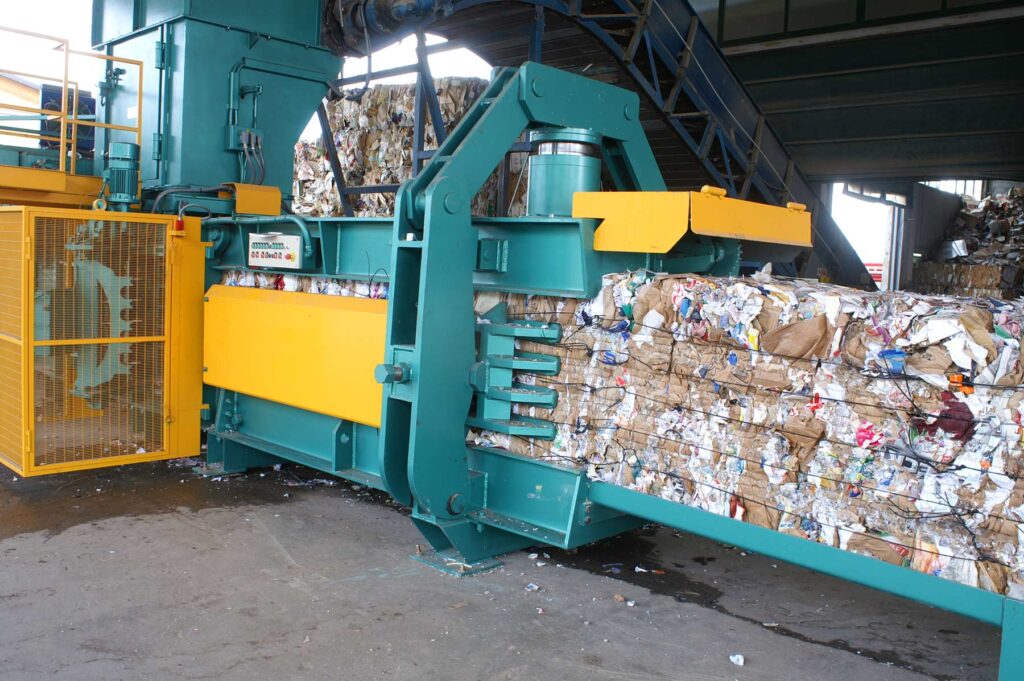
A turning point: 2005, the MAC 110 and the breakthrough at SESA
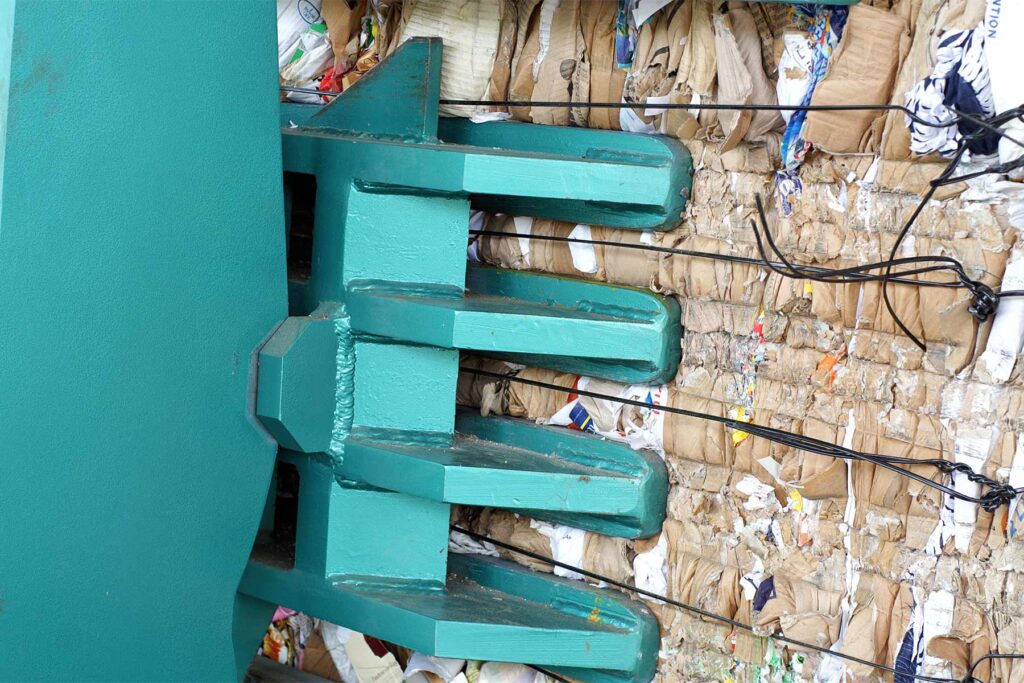
The setting was SESA (Società Estense Servizi Ambientali), a Veneto-based facility and one of Italy’s most advanced plants for waste management. In 2005, the first MAC 110 equipped with an electromechanical synthetic wire tying system was installed. Not a pilot-scale test, but a concrete industrial decision: bales of over one cubic metre, tied with 5 high-tenacity PET wires, processed for storage, transport, and incineration.
The innovation was both technical and operational: plastic baling wire is combustible, compatible with existing tying units, safe to handle, and stable in cost. Most importantly, it eliminates the need for manual removal of metal wires before the incinerator, dramatically reducing time and labour.
This baler, covered by a specific patent filed by Macpresse, would become a technical benchmark over time. To this day, tender specifications in the sector still reference plastic wire “MAC 110 type”.
Why move away from steel wire?
Steel wire has long been the default choice for bale tying, but it comes with clear limitations:
- Incompatibility with incinerators: it must be removed prior to incineration.
- Metal residues: interference with energy recovery processes.
- Operator hazards: sharp ends, potential oxidation.
- Volatile costs: subject to metal market fluctuations.
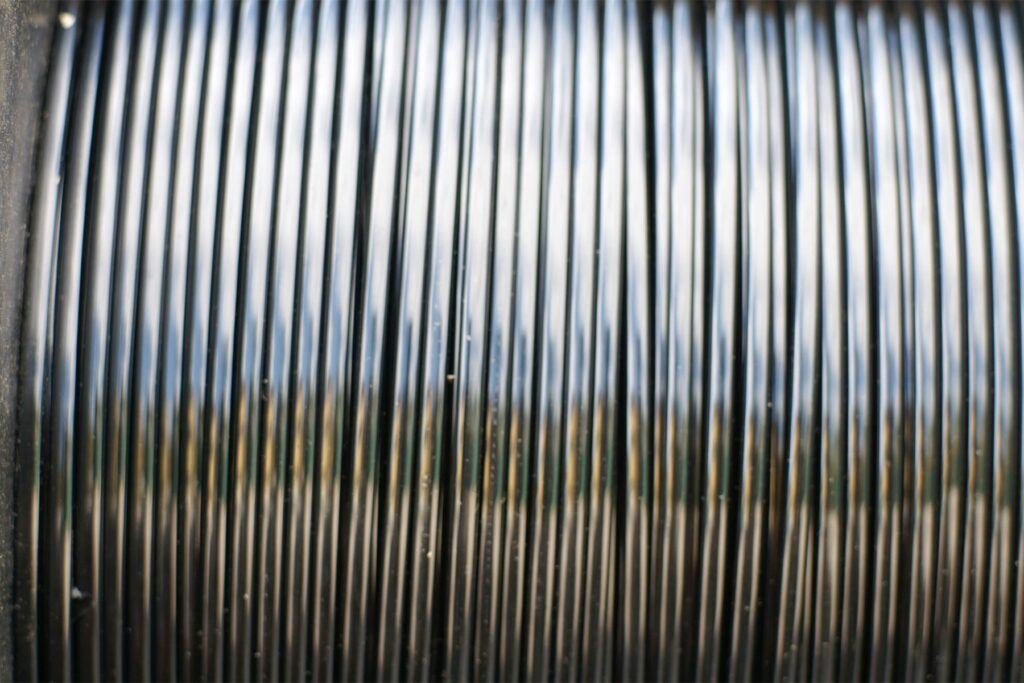
Macpresse responded with a high-tenacity PET wire, fully combustible and compatible with existing tying devices. Rigidity and flexibility comparable to metal, but with superior benefits.
Technical advantages: real-world data and case studies
The introduction of plastic baling wire has delivered a range of measurable improvements. With the same number of ties (typically 4 or 5, depending on bale size), PET wire provides equivalent — if not superior — holding strength compared to metal, with tensile resistance estimated up to 40% higher.
From an economic standpoint, the average saving per bale ranges from 30 to 50% compared to steel wire. Additionally, thanks to its optimised tensioning and cutting system, Macpresse has achieved a further 20% reduction in plastic wire consumption, for the same function. In a plant producing 800 bales per day, this translates to tens of kilometres less wire per year.
On the operational side, indirect costs are also significantly reduced:
- No more wire separation prior to the incinerator.
- No downtime for manual wire extraction.
- No risk of metal residues in clinker (when used in cement plants).
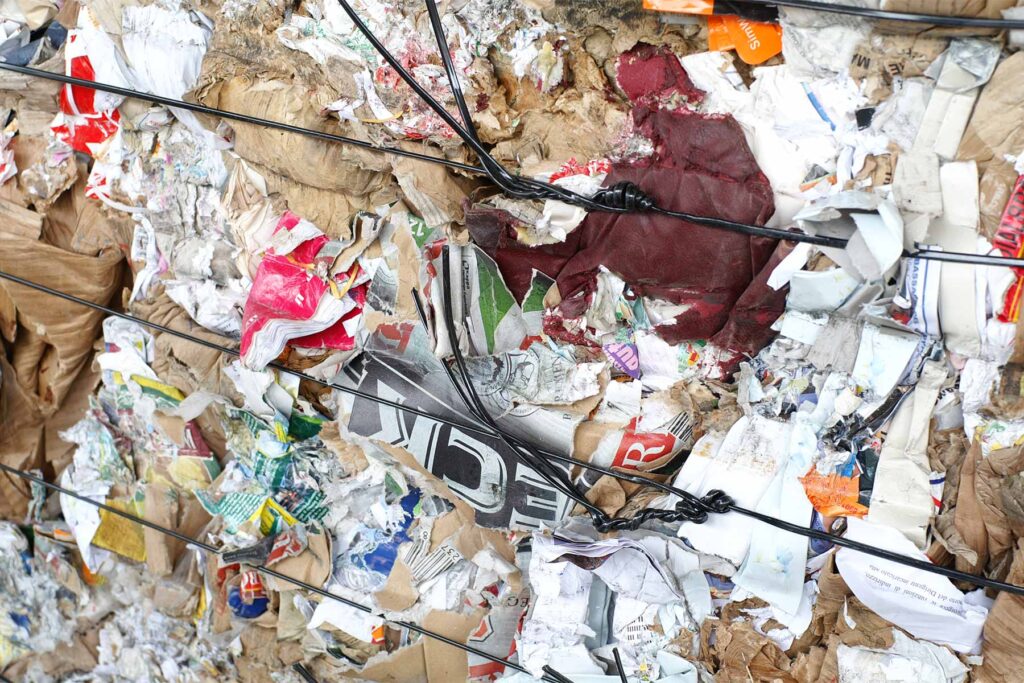
Operator safety must also be considered: unlike metal, plastic wire does not produce sharp ends and does not rust, reducing the risk of injuries and tying unit maintenance requirements.
The numbers speak for themselves: real savings for operators
- 30–50% reduction in material costs.
- Up to 20% less wire used per bale.
- Zero pre-incineration removal costs.
- Greater transport efficiency: less dead weight, denser loads.
Where plastic wire tying is used — and why it works
Plastic baling wire has found fertile ground in all plants processing materials destined for energy recovery or requiring outdoor storage.
- RDF (Refuse Derived Fuel): Bales can be fed directly into the furnace. The plastic wire burns without leaving residues, contributing to the calorific value.
- Biomass and composting: Greater safety and compatibility with automated lines.
- Mobile and temporary plants: Macpresse has designed mobile solutions integrating baler and wrapping unit, ideal for emergency use or site remediation.
Integration with stretch film: the key to safe storage
One limitation of steel wire-tied bales is the difficulty in wrapping them with stretch film: the sharp metal ends risk tearing the film, compromising the seal. This problem is entirely overcome with plastic baling wire.
PET wire integrates seamlessly with film wrapping systems — both rotary arm and turntable types — allowing the production of fully sealed bales without interruptions or punctures. The film remains intact even in the presence of leachate, moisture, or external pressure. This is the ideal solution for eco-bales stored outdoors, typical of MSW management in areas with logistical constraints.
Plastic wire tying: from innovation to international standard
By introducing the plastic wire tying system, Macpresse anticipated a trend that would become a globally recognised technical standard within just a few years. The ability to tie bales with combustible materials while maintaining high mechanical performance and improving compatibility with RDF and MSW flows has redefined the requirements expected of waste treatment plants.
Today, horizontal tying with PET or PP wires and controlled tensioning systems are adopted worldwide, confirming that the approach developed by Macpresse has helped set the technological direction for the entire sector — not only technically, but also operationally and environmentally.
A technology that remains current
Nearly 20 years after its introduction, the Macpresse plastic wire tying unit is integrated into the MAC 108, 110, 111, and 112 series balers. The multipurpose system allows switching from steel wire to plastic wire without changing machine — only quick component adjustments are required.
A technology that has become a standard: efficiency, safety, sustainability
The adoption of plastic baling wire today represents a sound technical, economic, and environmental choice. It is not an experimental alternative, but a proven technology — born from an Italian industrial insight and confirmed by more than two decades of real-world application.
Macpresse continues to lead innovation in the sector, with solutions designed to meet the true needs of plants and operators.
Why choose Macpresse plastic baling wire
- Field-proven innovation: over 20 years of industrial experience.
- Full compatibility with incinerators, cement plants, and RDF facilities.
- Operational flexibility thanks to the multipurpose plastic wire tying unit.
- Economic and environmental efficiency: lower costs, greater safety, improved sustainability.
Macpresse continues to lead innovation in the sector, with solutions designed to meet the true needs of plants and operators.