Dewatering to optimise paper recycling
Dewatering for paper mill waste and pulper reject management
To promote sustainable practices and the circular economy, effective waste management, both municipal and industrial, is becoming increasingly important. This also applies to the dewatering process of paper waste and to the management of its unwanted by-product, pulper reject.
What is pulper reject?
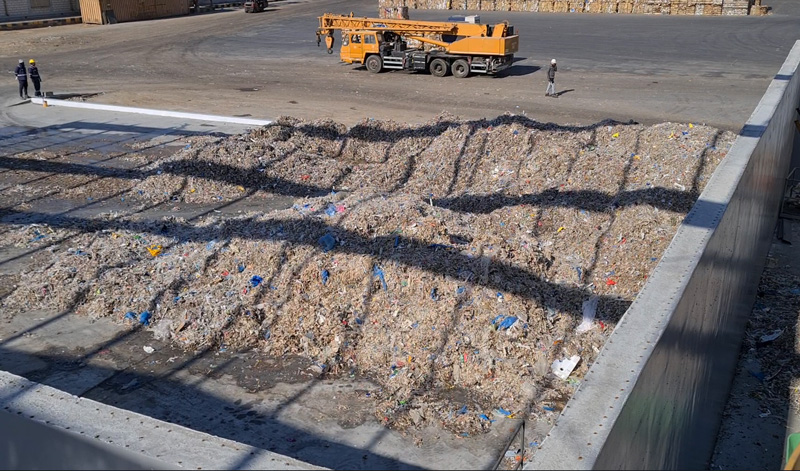
Pulper reject is a mixture made up of materials that cannot be recycled within the paper production process, such as plastics, fibres, metals, glass and sand, and it represents only a limited fraction of the total waste stream.
It is mainly disposed of in landfill or through energy recovery by combustion.

The challenges of disposal
At present, the two main disposal options for pulper reject are landfill and energy recovery.
It must be considered that both options have limitations:
- Landfill: landfill can represent a threat to the environment because of the potential pollution of groundwater and greenhouse gas emissions.
- Energy recovery: energy recovery is a more sustainable option, but it requires suitable infrastructure, which is not always available. In addition, pulper reject has a low calorific value and a high moisture content, which reduces its energy efficiency.
Dewatering as a solution for paper mills
Dewatering technology offers an innovative solution for the treatment of pulper reject: through a compaction and squeezing process, dewatering allows the liquid component to be separated from the solid one, significantly reducing the volume of the waste.
The advantages of dewatering
The benefits of dewatering are many:
- Reduction in waste volume: it can reduce the volume of waste from a paper mill by up to 40%, with consequent savings in transport and disposal costs.
- Water recovery: the water separated from the waste can be treated and reused in the production process.
- Improved energy recovery efficiency: the process increases the calorific value of the waste.
- Recycling potential: in some cases, the dewatered solid material can be sent for recycling, helping to support the circular economy.
Dewatering with MACPRESSE
Reduction in waste weight and volume
Dewatering presses represent a major step forward in the management of liquid waste.
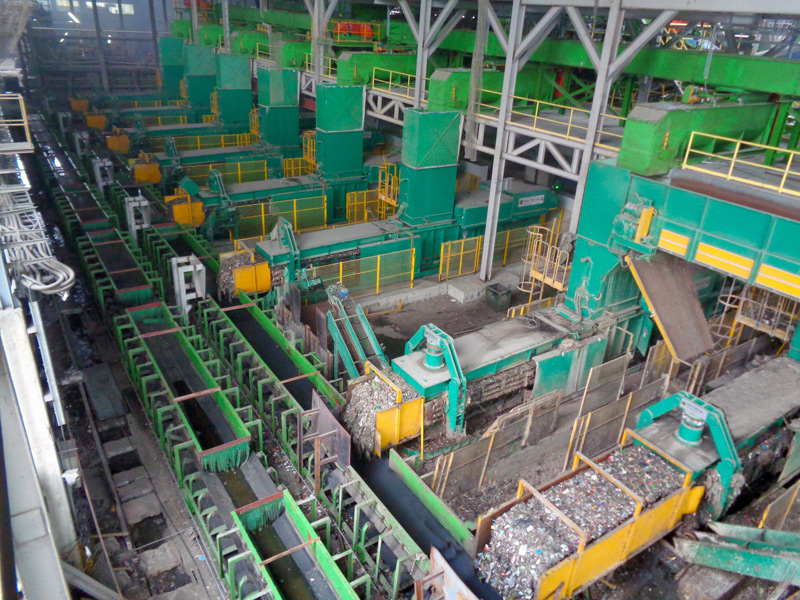
MAC/DW presses make it possible to separate the liquid component from solid materials, achieving a significant reduction in the overall weight and volume of waste, particularly in the paper industry, where the reject generated during the recycling process, known as paper mill pulper, contains a considerable quantity of water that can exceed 40%.
The different technologies available for dewatering
There are different dewatering technologies that can be applied to pulper reject, including:
- Screw presses: these presses compact the solid material while separating the liquid component, and they are suitable for small treatment plants.
- Belt filters: belt filters retain the solid part of the waste, while the liquid part passes through the belt. However, this type of process provides a limited reduction in the liquid component.
- Macpresse’s choice: the use of high-power baling presses with a system specifically designed to separate the liquid component from the material. It can handle large volumes of waste with significant results.
To see one of our dewatering solutions applied on an industrial scale, read the case study on the presses installed in Asia: Dewatering case study.
Choosing the most suitable technology for the needs of the paper industry
The factors that influence the choice of technology for pulper reject management are:
- The characteristics of the pulper reject: the composition and particle size of the material influence the choice of the dewatering process.
- The company’s specific requirements: the required treatment capacity, the available budget and the company’s sustainability goals.
Application sectors of dewatering presses for paper mills
In the paper industry, the use of MAC/DW presses allows water to be separated from paper mill pulper, significantly reducing the weight of the residual waste.
For example, the use of the Macpresse 111DW press enabled the Arab Paper plant to reduce the weight of its waste by 40%, together with a significant reduction in volume.
This allowed the paper mill to substantially reduce the costs associated with waste management and transport to landfill.
Are you interested in reducing the costs of paper mill waste management and transport?
Contact us. One of our experts will provide all the information you need and guide you towards the solution best suited to your requirements.